
European Cold-Chain OT Sabotage: Inside the 50°C Supermarket Refrigeration Cyberattacks Across 7 Countries & The Joint FBI/CISA Industrial Cold-Chain Advisory

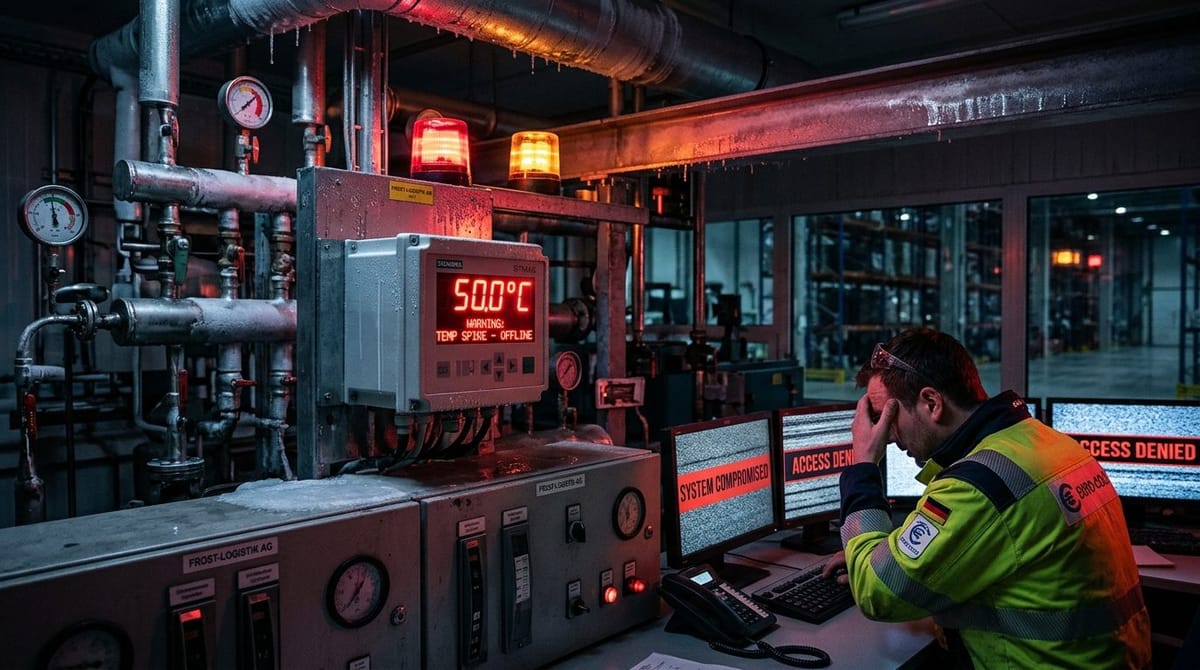
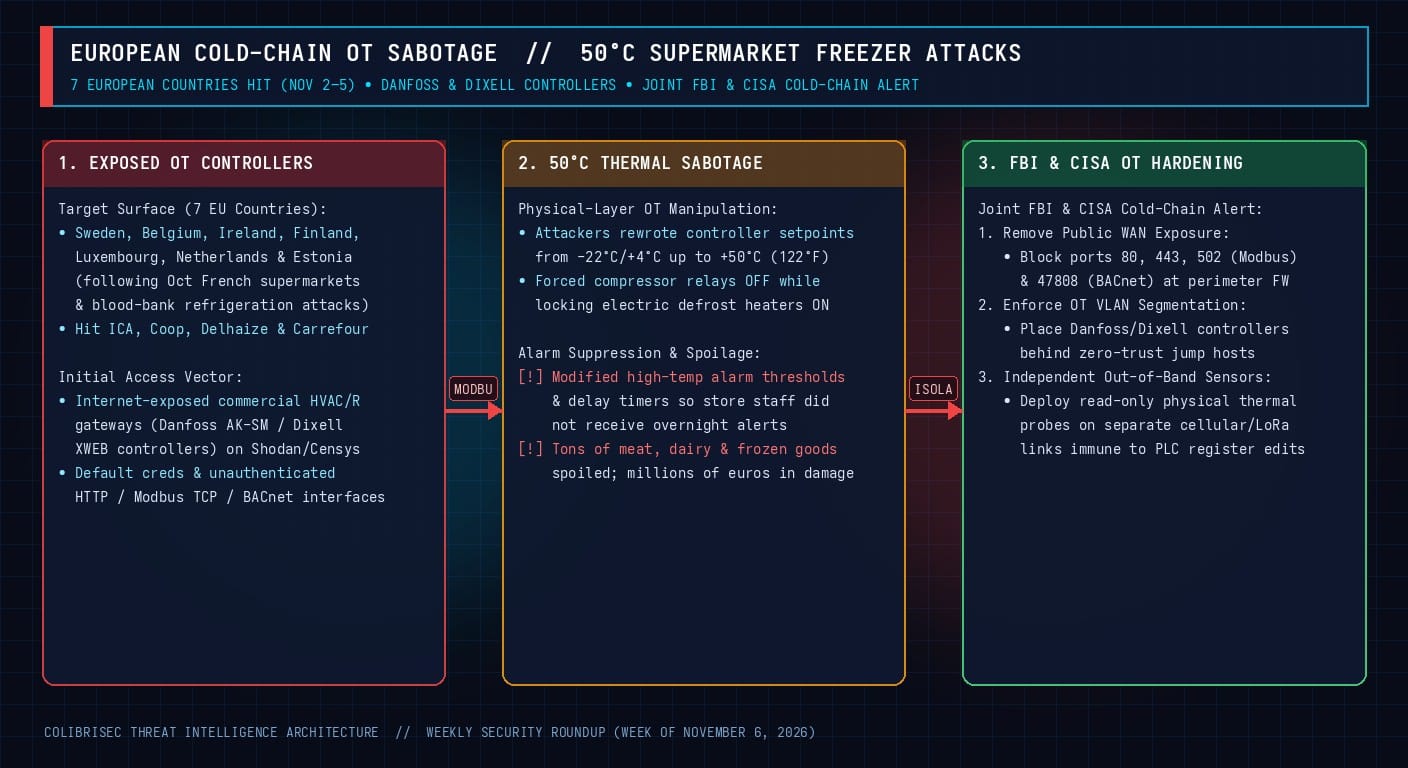
Over the weekend of November 2, 2026, and continuing through November 5, a coordinated wave of operational technology (OT) cyberattacks struck the European food supply chain, targeting commercial refrigeration and freezer management systems across at least seven countries: Sweden, Belgium, Ireland, Finland, Luxembourg, the Netherlands, and Estonia (following an initial wave against French supermarkets and blood-storage facilities in October). Major grocery operators—including ICA, Coop, Delhaize, and Carrefour—discovered that hackers had remotely accessed store refrigeration controllers overnight, forcing walk-in freezers and chilled display cases into continuous defrost/heating modes that spiked internal temperatures up to 50°C (122°F) while muting high-temperature alarms. Tons of meat, dairy, produce, and frozen goods had to be destroyed, prompting an emergency Joint FBI and CISA Critical Infrastructure Alert warning U.S. and global cold-chain operators to immediately lock down industrial refrigeration systems.
1. Anatomy of the 50°C Thermal Sabotage: Danfoss & Dixell HVAC/R Controllers
Modern supermarkets rely on centralized building and refrigeration management gateways—such as Danfoss AK-SM 800/800A series system managers and Emerson/Copeland Dixell XWEB (XWEB300D / XWEB500D) controllers—to monitor evaporator pressures, schedule defrost cycles, and log hazard analysis critical control point (HACCP) food-safety temperatures across dozens of refrigeration racks.
How Attackers Turned Freezers into Ovens
- Direct WAN Exposure & Default Credentials: To allow third-party HVAC maintenance contractors to troubleshoot store compressors remotely without configuring a VPN, hundreds of retail locations exposed their Danfoss and Dixell web interfaces (ports
80/443), Modbus TCP (port502), or BACnet/IP (UDP port47808) directly to the public internet, often leaving factory default administrative logins intact or running firmware vulnerable to known authentication bypasses. - Setpoint Rewriting & Forced Electric Defrost: Once authenticated to the controller’s web UI or Modbus register map, attackers altered target temperature setpoints from
-22°C(freezers) and+2°C(chillers) up to+50°C (122°F), turned off compressor suction relays, and manually locked the electric defrost heating elements into an active state. - Alarm Threshold Suppression: To ensure store managers and overnight monitoring centers would not intervene until food had already spoiled and compressor hardware was thermally stressed, the attackers simultaneously raised the high-temperature alarm ceiling and increased the alarm delay timer to the maximum allowable duration (e.g., 8–12 hours).
2. The Joint FBI & CISA Cold-Chain Infrastructure Alert
Recognizing that identical Danfoss, Dixell, Carel, and Honeywell refrigeration controllers govern U.S. grocery chains, pharmaceutical cold storage, and hospital blood banks, the FBI and CISA issued a joint advisory outlining mandatory defensive actions for OT and facilities teams:
# 1. Audit perimeter IP space for exposed refrigeration & building controllers:
nmap -sS -sU -p T:80,T:443,T:502,T:102,T:44818,U:47808 --open <enterprise-public-cidr>

# 2. Enforce nftables / perimeter firewall drops on OT Modbus & BACnet from WAN:
nft add rule inet filter input iifname "eth_wan" tcp dport { 80, 443, 502, 102, 44818 } drop
nft add rule inet filter input iifname "eth_wan" udp dport { 161, 47808 } drop- Hardware Thermal Cutouts & Independent Out-of-Band Probes: Beyond network segmentation and FIDO2 VPN jump hosts for HVAC contractors, FBI/CISA urged cold-chain operators to install electromechanical high-temperature cutouts (which physically open the defrost heater circuit above a safe temperature regardless of PLC software state) and deploy independent, read-only cellular/LoRaWAN temperature sensors that alert store managers out-of-band if cabinet temperatures drift by more than 3°C.

