
APT29 "Poisoned Source" Mobile Watering Holes, AI-Lure PhaaS (Kali365 & VoidProxy), Teams-to-AD CS Takeover & Global Breaches (Queens Library, Myriad Genetics, mSecure & Japan $63M Package)

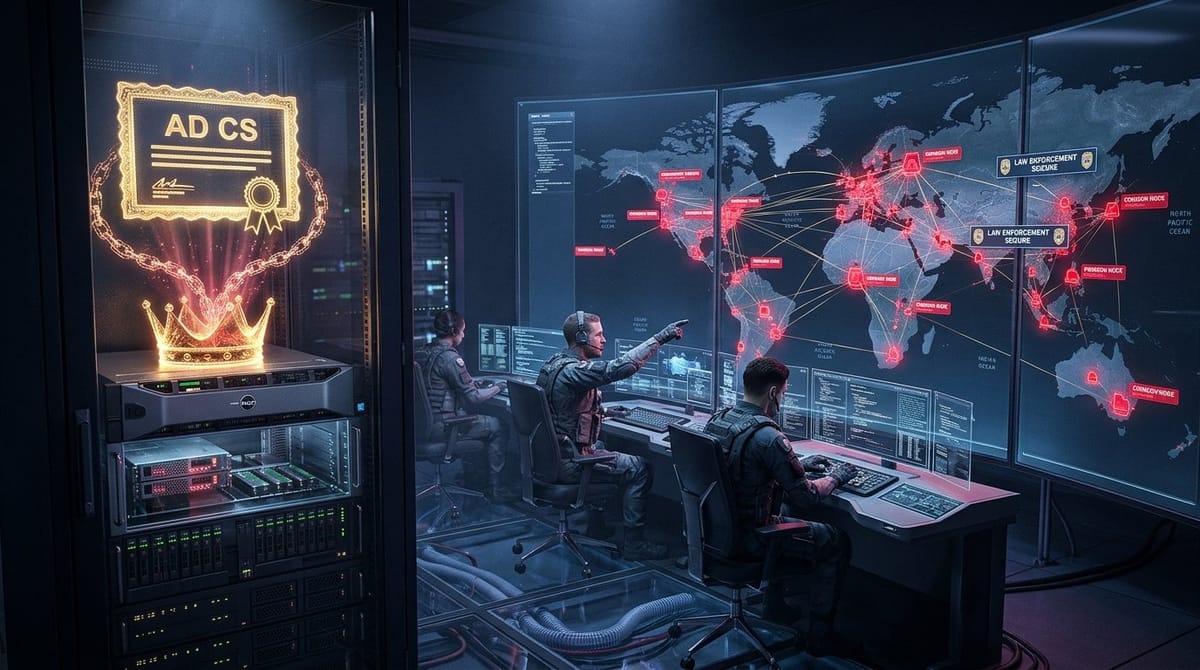
Beyond individual CVEs, the first week of November 2026 exposed a surge in sophisticated espionage delivery networks, identity-layer Phishing-as-a-Service (PhaaS) operations, Active Directory Certificate Services (AD CS) takeovers, and disruptive breaches across healthcare, finance, password managers, and civic infrastructure. French cybersecurity firm Sekoia uncovered "Poisoned Source", a large-scale mobile watering-hole campaign attributed to Russia’s APT29 (Midnight Blizzard / Cozy Bear) that compromised Ukrainian web analytics provider Plerdy to serve no-click iOS and Android N-day exploit chains across thousands of websites. Simultaneously, Push Security exposed an AI-themed phishing operation using fake OpenAI, SpaceX, and Anthropic event lures to funnel targets into Kali365 (device-code OAuth theft) and VoidProxy (AiTM reverse proxy); Microsoft Threat Intelligence detailed helpdesk vishing via Teams and Quick Assist escalating to AD CS (ESC1/ESC8) domain dominance; and major cyber incidents struck the Queens Public Library, Myriad Genetics, mSecure, Spear Physical Therapy, Abrigo, Delaware E-ZPass, SmartNews, and Switzerland’s Canton Vaud, while Japan unveiled an emergency $63 million cybersecurity rescue package.
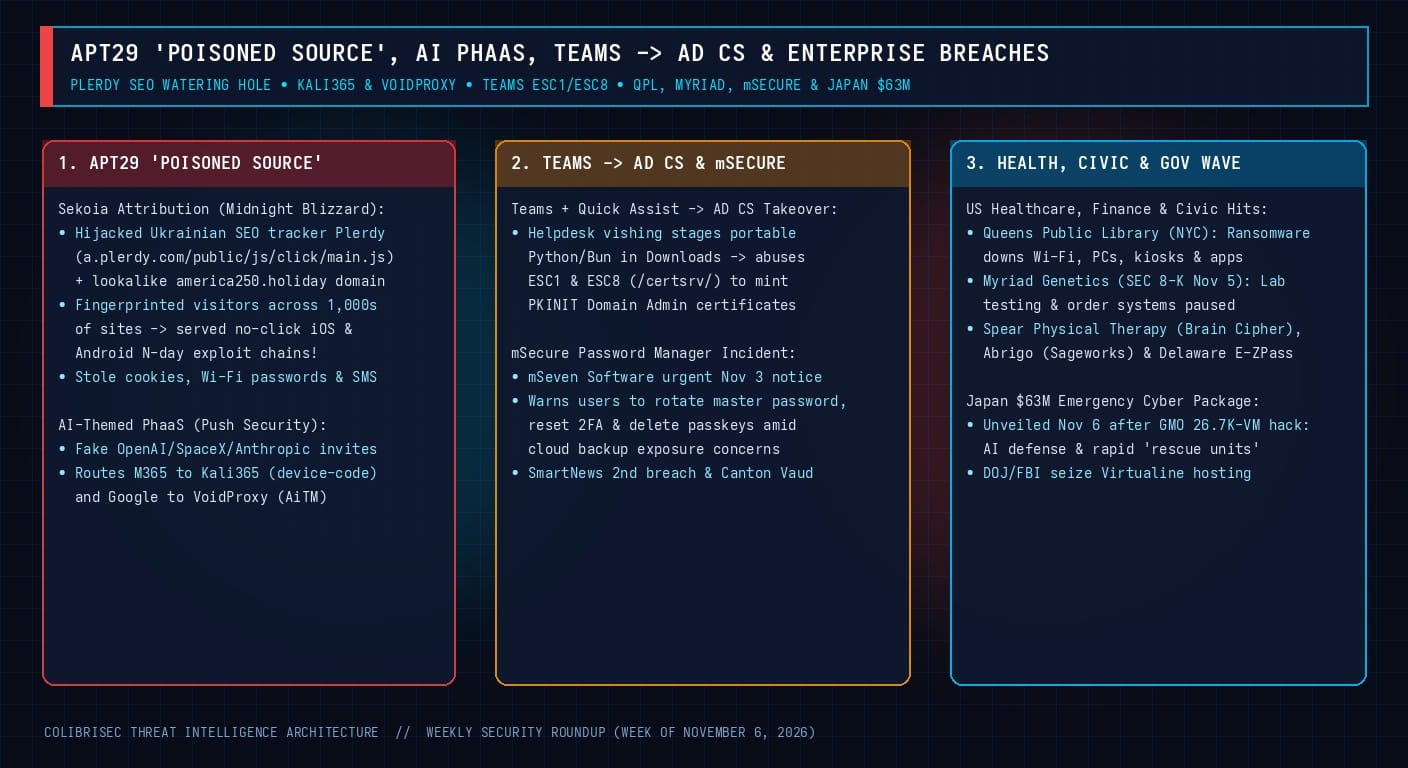
1. APT29’s "Poisoned Source" Mobile Exploit Campaign (Plerdy SEO Hijack)
According to Sekoia’s November 2026 technical report, Russia-nexus espionage group APT29 executed a three-pronged watering-hole strategy designed specifically to compromise mobile devices (iOS and Android) belonging to government, military, political, and industrial personnel:
- Supply-Chain Poisoning of Plerdy SEO Tracker: Attackers breached Ukrainian conversion and SEO analytics platform Plerdy and injected malicious JavaScript loader code directly into its primary tracking script:
a.plerdy[.]com/public/js/click/main.js. Because thousands of legitimate Ukrainian and European websites embed Plerdy for heatmap analytics, every visitor loading those sites automatically executed APT29’s reconnaissance script. - Compromised Portals & Lookalike Proxy Domains: APT29 supplemented the Plerdy supply chain by injecting scripts into chemical-industry and European political portals and operating rogue lookalike infrastructure—including
america250[.]holiday(mimicking the U.S. America250 initiative) that transparently proxied legitimate content while running silent device fingerprinting. - No-Click iOS & Android N-Day Exploit Chains: When the fingerprinting script identified a targeted iOS or Android device running an unpatched browser/OS build, the server silently delivered platform-specific N-day exploit chains requiring zero user interaction—extracting browser session cookies, saved Wi-Fi passwords, SMS messages, and keychain credentials.
2. AI Event Lures (Kali365 & VoidProxy) and Microsoft Teams → AD CS Takeovers
Identity and Active Directory teams faced two converging social-engineering-to-token-theft pipelines this week:
- Fake OpenAI, SpaceX & Anthropic Invites Routing to
Kali365andVoidProxy: Researchers at Push Security analyzed phishing kits (tracked asMSDRootandZoomMock) sending convincing invitations to an OpenAI livestream ("ChatGPT for Social & Digital Marketing Teams" offering 3 months of ChatGPT Pro), an invite-only SpaceX "Starship Product Briefing" featuring Grok Heavy / SpaceX share incentives, and Anthropic AWS re:Invent events. Clicking "Continue with Microsoft" triggers an OAuth device-code phishing flow via Kali365 (capturing persistent M365 refresh tokens without needing passwords), while clicking "Continue with Google" routes the victim through VoidProxy, an Adversary-in-the-Middle (AiTM) reverse proxy that steals live Google Workspace session cookies. - Microsoft Teams + Quick Assist → AD CS (ESC1 / ESC8) Domain Persistence: Microsoft Threat Intelligence warned that threat actors posing as IT helpdesk staff over external Microsoft Teams chats are convincing employees to launch Windows Quick Assist (
QuickAssist.exe), silently staging portable Python, Bun, and Java runtimes inside%USERPROFILE%Downloads, and immediately abusing misconfigured Active Directory Certificate Services (AD CS) templates (ESC1 enrollee-supplied Subject Alternative Names or ESC8 NTLM relay via PetitPotam to HTTP/certsrv/) to mint Domain Admin X.509 certificates. Using PKINIT to request Kerberos TGTs, attackers maintain full domain control even after user passwords are reset and the initial workstation is wiped.
3. Enterprise, Healthcare & Public-Sector Breaches (November 2–6, 2026)
- Queens Public Library (NYC) Ransomware Outage (Nov 4–5): One of the largest public library systems in the United States—serving millions of New York City residents across dozens of branches—was hit by a crippling ransomware attack that knocked out its public website, mobile app, branch Wi-Fi, public computers, and self-checkout/return kiosks.
- Myriad Genetics Network Intrusion (SEC Form 8-K, Nov 2–5): Salt Lake City molecular diagnostics leader Myriad Genetics disclosed in an SEC Form 8-K filing on November 5 that it detected unauthorized network access on November 2, prompting a precautionary suspension of laboratory testing operations and order-management systems (with core clinical systems restored by November 5 as data-impact forensics continue).
- mSecure Password Manager Urgent Security Warning (Nov 3): mSeven Software sent an urgent notification to current and former users of the mSecure password manager citing "suspicious activity" and reports of encrypted cloud backup exposure—advising all customers to immediately change their master password, reset 2FA, and delete existing passkeys.
- Spear Physical Therapy (Brain Cipher), Abrigo (Sageworks) & Delaware E-ZPass (Nov 4–5): Tri-state healthcare provider Spear Physical Therapy was linked to a ransomware attack by the Brain Cipher gang; financial risk-management software provider Abrigo took its Sageworks platform offline following a data security incident; and contractor TransCore took the Delaware E-ZPass customer portal offline on November 5 after detecting a security threat.
- SmartNews Second Intrusion, Canton Vaud & Japan’s $63M Cyber Rescue Package: News aggregator SmartNews suffered a second intrusion in 10 days targeting its rewards/points system; Switzerland’s Canton Vaud disclosed a breach of its post-compulsory education IT support platform exposing 38,000 students and 3,500 teachers (41,500 records); the U.S. DOJ/FBI and European partners seized the Virtualine ("Secury" / "Massgod") bulletproof hosting service and sentenced Syrian Electronic Army hacker Ahmad Umar Agha ("Th3Pr0") to 42 months; and on November 6, following the massive 26,700-VM GMO Internet Group (Onamae.com) breach, the Japanese government unveiled a $63 million emergency cybersecurity package establishing AI-driven active defense and rapid-response "rescue units."

