
CISA KEV & Perimeter MFA Bypass: SonicWall SonicOS SSL-VPN SAML Bypass (CVE-2026-19868), Apple (CVE-2024-27834) & WordPress Core (CVE-2026-119977)

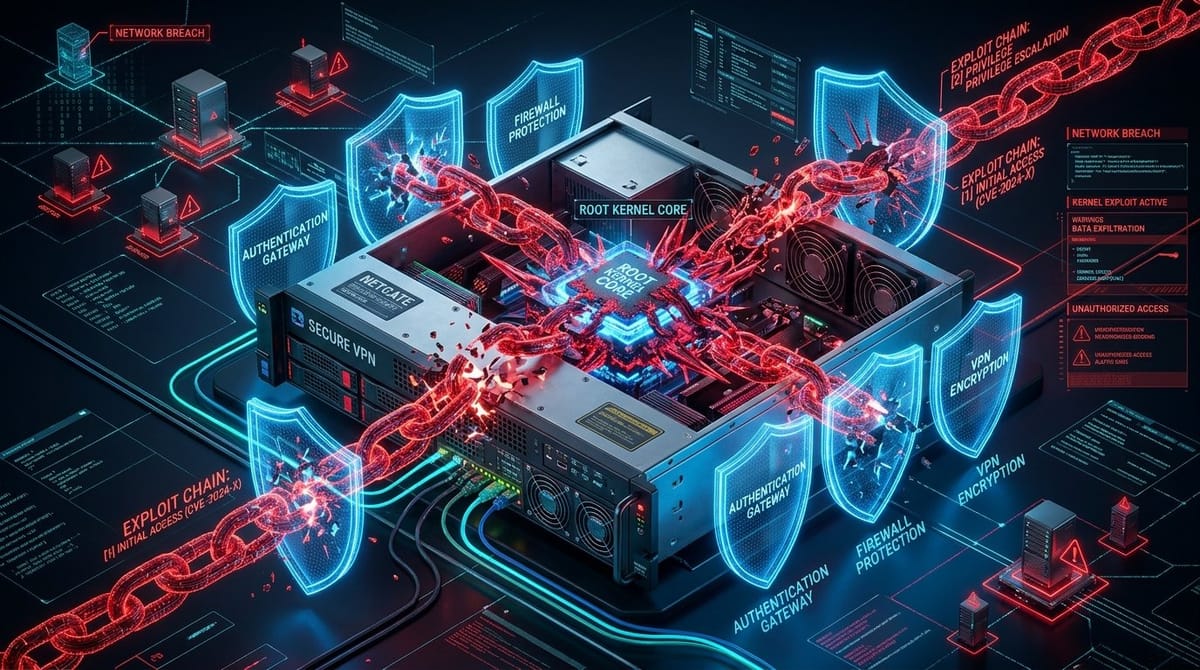
CVE-2026-19868 (SNWLID-2026-0014), CVE-2024-27834 & CVE-2026-119977 (CWE-308 (Use of Single-Factor Authentication), CWE-287 (Improper Auth) & CWE-367 (TOCTOU Race))
Severity: HIGH / CRITICAL (ACTIVE CISA KEV EXPLOITATION — NO WORKAROUND FOR SONICOS) (CVSS 7.1 SonicWall / 7.5 CISA ADP (CVE-2026-19868) & 8.1 (CVE-2026-119977))
Threat Actor: Ransomware Initial Access Brokers & Opportunistic Botnets
Status: Added to CISA KEV Nov 3–6, 2026; FCEB Remediation Due Nov 6 (WP), Nov 18 (Apple) & Nov 20 (SonicWall)
Affected Systems: SonicOS Gen 7 <= 7.3.3-7015 & Gen 8 <= 8.2.2-8015 (SSL-VPN with SAML); Apple iOS/macOS; WordPress 4.7–7.1.3
Fixed In: SonicOS 7.3.4-7013+ (Gen 7) & 8.2.3-8015+ (Gen 8); WordPress 7.1.4
On November 6, 2026, SonicWall published security advisory SNWLID-2026-0014 addressing seven vulnerabilities across Gen 7 and Gen 8 physical and virtual firewalls, led by CVE-2026-19868—an actively exploited authentication enforcement flaw in the SonicOS SSL-VPN service that allows an attacker with valid single-factor credentials for an alternate authentication backend to completely bypass SAML-enforced Multi-Factor Authentication (MFA). Within hours of SonicWall’s disclosure, the U.S. Cybersecurity and Infrastructure Security Agency (CISA) added CVE-2026-19868 to its Known Exploited Vulnerabilities (KEV) catalog under Binding Operational Directive (BOD) 26-04 with a mandatory remediation deadline of November 20, 2026, joining the November 4 KEV addition of Apple improper authentication flaw CVE-2024-27834 and the November 6 enforcement deadline for WordPress Core’s upgrade race RCE (CVE-2026-119977).
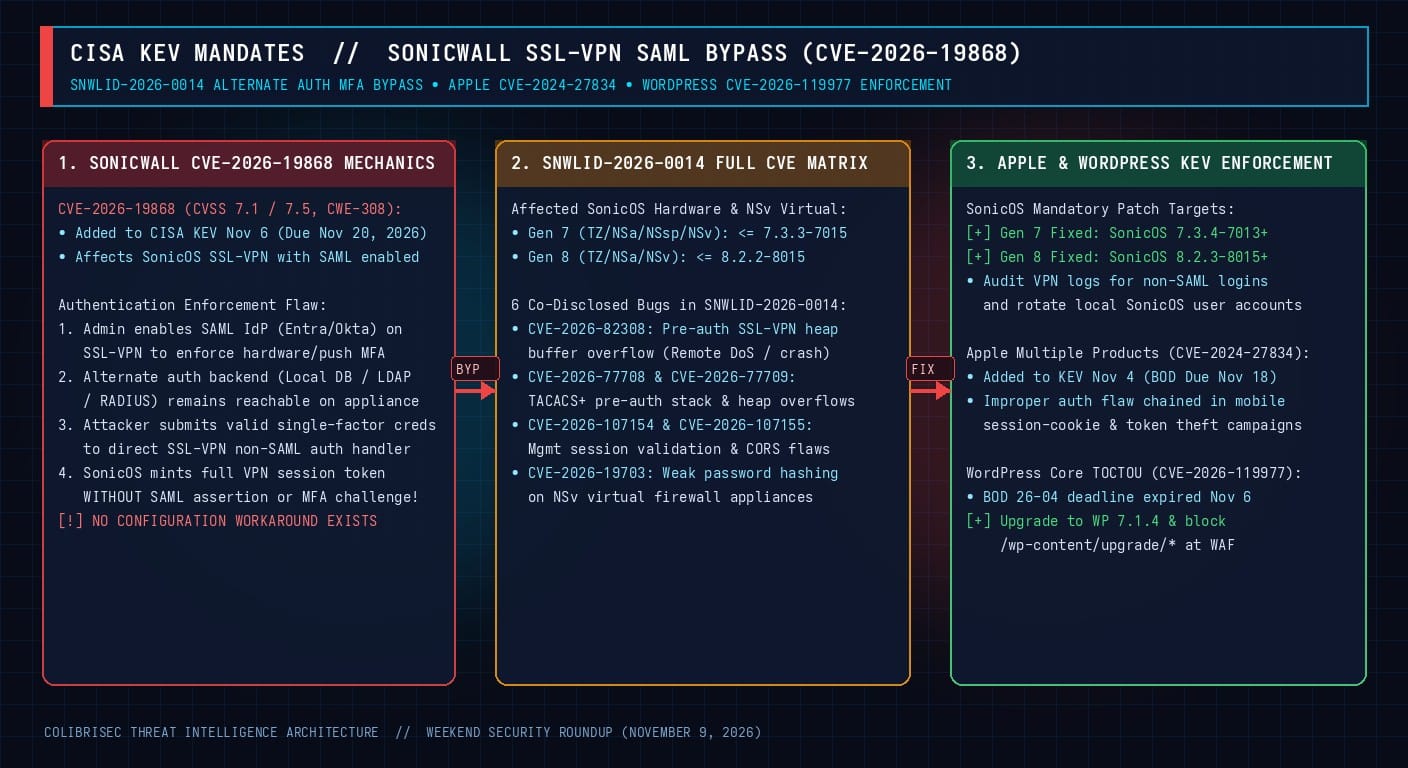
1. Anatomy of SonicWall SonicOS SSL-VPN SAML Bypass (CVE-2026-19868)
Following years of credential-stuffing and ransomware campaigns targeting perimeter VPN appliances, thousands of enterprises migrated their SonicWall SSL-VPN user populations to SAML 2.0 federated authentication (integrating Microsoft Entra ID, Okta, or Duo) specifically so that every VPN login would be governed by Conditional Access and phishing-resistant MFA. Under normal operation, when a user connects to the SonicOS SSL-VPN portal or NetExtender/Mobile Connect endpoint with SAML enabled, SonicOS redirects the client to the SAML Identity Provider (IdP) and refuses to issue an SSL-VPN session cookie until a cryptographically signed <samlp:Response> assertion is returned.
Root Cause: Unenforced SAML Exclusivity Across Alternate Auth Handlers (CWE-308)
Tracked under CWE-308 (Use of Single-Factor Authentication), CVE-2026-19868 occurs because enabling SAML on the SonicOS SSL-VPN interface did not strictly disable or gate the underlying legacy/alternate authentication state machine when secondary authentication methods (such as Local Users, LDAP, or RADIUS) remained configured on the appliance:
/* Conceptual representation of the SonicOS SSL-VPN auth enforcement flaw (CVE-2026-19868) */
int sslvpn_handle_auth_request(http_req_t *req, sslvpn_cfg_t *cfg) {
    /* Admin enabled SAML on the SSL-VPN portal to enforce IdP MFA: */
    if (req->auth_flow == FLOW_SAML_SP_INITIATED) {
        return verify_saml_assertion_and_issue_session(req, cfg->saml_idp);
    }

    /* BUG (CWE-308): If the client directly submits credentials or selects
     * an alternate authentication domain/endpoint (e.g., Local DB or LDAP)
     * instead of following the SAML redirect flow, SonicOS validates the
     * single-factor password against the alternate backend and mints a full
     * SSL-VPN session WITHOUT enforcing SAML or SAML-backed MFA! */
    if (authenticate_alternate_backend(req->username, req->password, req->domain) == AUTH_OK) {
        return sslvpn_mint_active_session(req->username); /* MFA BYPASSED! */
    }
    return AUTH_DENIED;
}
Crucially, SonicWall emphasized two operational realities that make CVE-2026-19868 an emergency for firewall administrators:
- Active In-the-Wild Exploitation: Threat actors possessing leaked, phished, or brute-forced single-factor AD/LDAP or local SonicOS credentials are actively using this path to establish full SSL-VPN tunnels into networks whose defenders believed SAML MFA protected every login.
- No Configuration Workaround Exists: SonicWall explicitly confirmed that there is no configuration workaround to remediate CVE-2026-19868 short of upgrading SonicOS firmware or disabling the SSL-VPN service entirely.
2. The Complete SNWLID-2026-0014 Vulnerability Matrix (7 CVEs Patched)
In addition to CVE-2026-19868, SonicWall’s November 6 advisory SNWLID-2026-0014 resolves six additional vulnerabilities across hardware (TZ, NSa, NSsp) and virtual (NSv on ESXi, KVM, Hyper-V, AWS, and Azure) appliances:
- CVE-2026-82308 (SSL-VPN Pre-Auth Heap Buffer Overflow DoS): An unauthenticated remote attacker can send crafted payloads to the SSL-VPN listener to trigger a heap-based buffer overflow, crashing the firewall and causing a sustained Denial of Service.
- CVE-2026-77708 & CVE-2026-77709 (TACACS+ Pre-Auth Stack & Heap Overflows): Pre-authentication stack-based and heap-based buffer overflows in the SonicOS TACACS+ client/parsing implementation.
- CVE-2026-107154 & CVE-2026-107155 (Management Interface Session & Cross-Domain Flaws): Improper session validation and cross-domain policy enforcement in the SonicOS web management interface.
- CVE-2026-19703 (NSv Weak Password Hashing): Weak password hashing algorithm usage affecting SonicWall NSv virtual firewall deployments.
3. Parallel CISA KEV Actions: Apple (CVE-2024-27834) & WordPress Core (CVE-2026-119977)
- Apple Multiple Products Improper Authentication (CVE-2024-27834 — Added Nov 4, Due Nov 18): CISA added this older improper authentication vulnerability affecting Apple iOS, iPadOS, and macOS components to the KEV catalog after threat intelligence feeds documented its incorporation into mobile data-exfiltration and session-cookie theft exploit chains (including watering-hole campaigns targeting unpatched mobile devices).
- WordPress Core Upgrade TOCTOU Race RCE (CVE-2026-119977 — BOD Deadline Nov 6): Friday, November 6 marked the mandatory federal remediation deadline for WordPress Core’s
/wp-content/upgrade/extraction race condition (fixed in WordPress7.1.4), where unauthenticated attackers poll for staged installer scripts likesetup-config.phpduring the multi-second archive extraction window.
Remediation & SIEM Hunting Playbook
# 1. Mandatory SonicOS Firmware Upgrades (SNWLID-2026-0014 / CVE-2026-19868):
# - SonicOS Gen 7 (TZ, NSa, NSsp, NSv): Upgrade from <= 7.3.3-7015 to 7.3.4-7013 or higher
# - SonicOS Gen 8 (TZ, NSa, NSv):       Upgrade from <= 8.2.2-8015 to 8.2.3-8015 or higher

# 2. Hunt SonicWall Syslog / SIEM Telemetry for Non-SAML SSL-VPN Logins:
# Look for SSL-VPN session establishment events (Event ID 257 / 1079) where SAML
# is expected, but the authentication method / domain indicates Local or LDAP:
grep -E "SSL VPN zone user login|id=firewall.*m=(257|1079)" /var/log/sonicwall.log | grep -v -i "saml"

# 3. Post-Patch Hygiene on SonicWall Firewalls:
# - Audit Users > Local Users & Groups and delete/disable any unnecessary local SSL-VPN accounts
# - Rotate passwords for all LDAP/AD accounts in the SonicWall SSLVPN Services group
# - Enforce SonicOS built-in TOTP/OTP MFA on local accounts as defense-in-depth alongside SAML
