
Global Maritime Extortion Wave ("n0n") & Loxone Cyberattack: Supply-Chain Port Extortion vs. Local OT Resilience

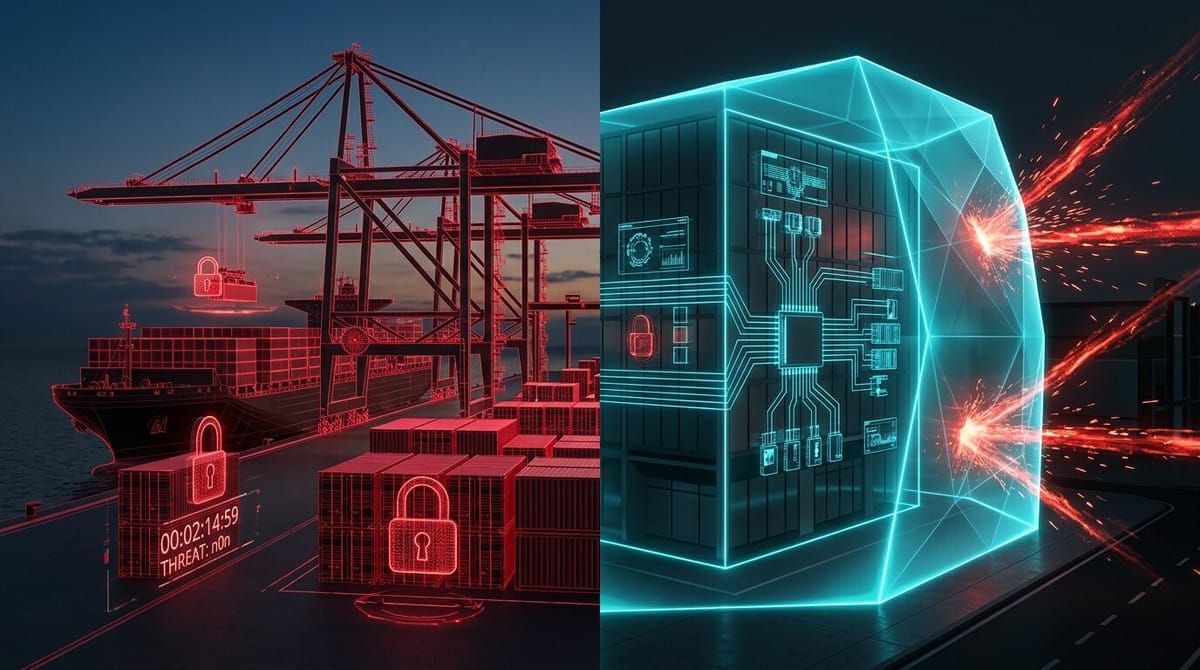
Two high-profile industrial and operational technology (OT) incidents converged over the weekend of October 18–19, 2026, offering a stark study in supply-chain concentration risk versus local-first architectural resilience. Across the global oceans, 38 maritime container terminals, port authorities, and shipping lines across 18 countries reached the October 19, 2026 (13:27 UTC) ransom deadline imposed by the emerging "n0n" extortion group. Simultaneously, on October 18, Austrian smart-home and commercial building automation giant Loxone disclosed a cyberattack and data exfiltration on its internal corporate IT systems—while demonstrating how its "cloud-free" local hardware architecture prevented attackers from touching a single customer building.
Part 1: Inside the "n0n" Maritime Extortion Wave Targeting 38 Global Entities
On October 12, 2026, a newly emerged data-extortion group calling itself n0n abruptly listed 38 maritime, port terminal, and logistics organizations on its Tor leak portal, synchronizing all 38 countdown timers to expire on Monday, October 19, 2026, at 13:27 UTC. Individual ransom demands ranged from $2.4 million to $14 million.
Geographic & Operational Target Profile
- South Korean Port Concentration: A major cluster of victims centered on South Korea's vital shipping hubs, including major Busan container terminal operators (such as Busan New Container Terminal / BNCT and Pusan Newport Company / PNC) and regional maritime logistics firms.
- Global Container & Shipping Nodes: The victim manifest spanned 18 countries across Europe, North and South America, the Middle East, and Asia, listing entities such as Eurogate Tanger (Morocco), Santos Brasil (Brazil), and regional offices of major ocean carriers including Ocean Network Express (ONE).
Forensic Assessment: 38 Breaches or One Shared Maritime Software Vendor?
Simultaneously breaching 38 hardened port terminal networks across 18 countries without triggering a single ransomware encryption event raised immediate skepticism among maritime threat intelligence analysts (including Cydome and SOCRadar). Inspection of the proof-of-breach samples posted by n0n revealed a critical clue: rather than full Active Directory dumps or finance department shares, the leaked samples consisted almost exclusively of Terminal Operating System (TOS) deployment logs, Electronic Data Interchange (EDI) BAPLIE/COPARN container stowage messages, and vendor project configuration archives.
[Single Third-Party Maritime TOS / EDI Software Vendor Repository]
       |
       | Compromised Support Portal / Project Archive Server
       v
[Exfiltrated Client Support Bundles & EDI Schemas for 38 Port Operators]
       |
       +---> Listed by "n0n" as 38 separate multi-million-dollar extortion entries!
This pattern strongly indicates a single supply-chain compromise of a shared maritime IT software vendor or integration contractor (with technical telemetry pointing toward project archives associated with maritime TOS/EDI ecosystems such as CyberLogitec OPUS/ALLEGRO integration environments). By framing a single vendor repository theft as 38 direct port breaches, n0n sought to multiply its extortion leverage across the maritime supply chain.
Part 2: Loxone Cyberattack & The Triumph of "Cloud-Free" OT Isolation
On Sunday, October 18, 2026, European smart building and home automation manufacturer Loxone confirmed that threat actors penetrated parts of its internal corporate IT network and exfiltrated internal business data. In an era where cloud-tethered IoT/OT vendor breaches routinely allow hackers to unlock smart doors, manipulate HVAC systems, or brick customer hardware remotely, Loxone’s incident stood out for what did not happen.
Why Customer Smart Buildings Were Immune
Unlike cloud-dependent IoT ecosystems where every sensor and actuator maintains a persistent administrative command tunnel back to a central vendor cloud, Loxone engineered its building automation around a strict local-first ("cloud-free") Miniserver architecture:
- Autonomous Edge Execution: All lighting, HVAC, access control, and energy management logic executes locally on the building’s physical Miniserver hardware with zero dependency on Loxone’s corporate servers.
- Decoupled Corporate IT vs. Device Planes: Even optional remote access services (Remote Connect and Exosphere) operate on isolated infrastructure without backdoor administrative keys stored in Loxone’s corporate office IT network.
Defensive Takeaways for Industrial, Maritime & Building OT
- Sanitize TOS & EDI Support Bundles: Port operators and shipping lines must strip live VPN credentials, database connection strings, and production API keys before uploading diagnostic logs or EDI samples to third-party maritime software vendors (such as CyberLogitec, Navis, or Tideworks).
- Mandate Local-First OT Survival Mode: Industrial and building automation architects should follow the Loxone model: edge controllers (PLCs, Miniservers, RTUs) must never trust unsolicited configuration pushes from vendor corporate clouds and must operate with 100% functionality when external WAN links are severed.

