Inside the Kiteworks Emergency Shutdown: Anatomy of a Precautionary Zero-Day Defense Action

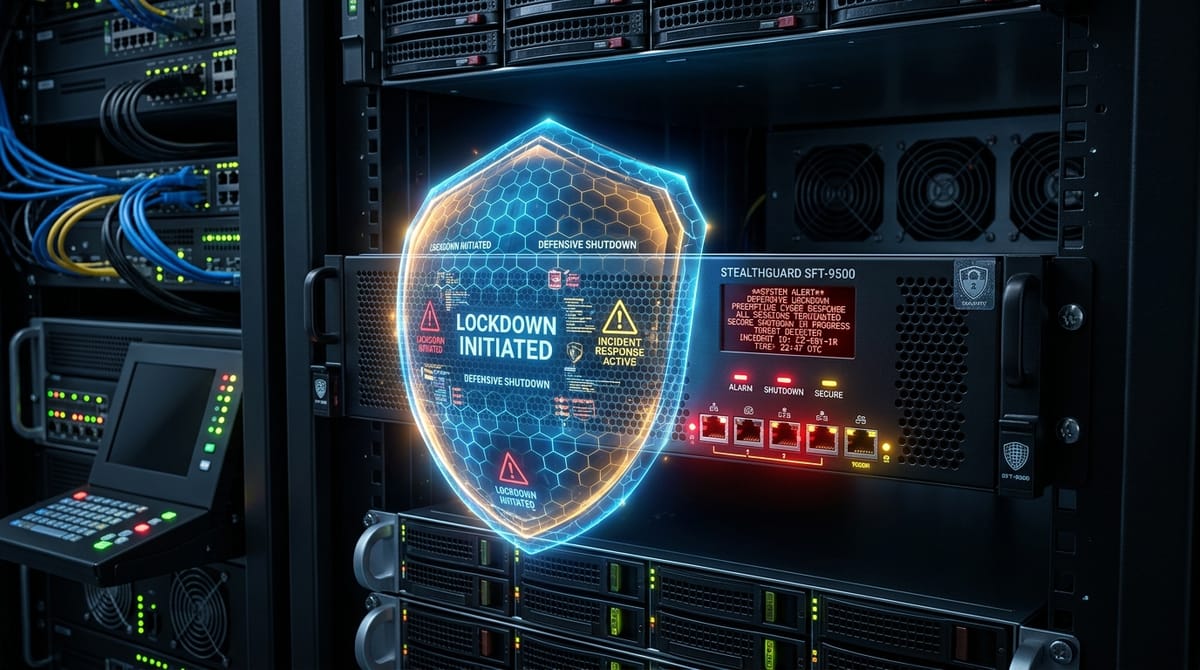
On September 25, 2026, Kiteworks (formerly Accellion) issued an unprecedented emergency advisory instructing all self-managed customer environments to initiate a coordinated, nine-hour defensive shutdown. The action was prompted by specific, credible threat intelligence received from federal intelligence agencies indicating that a nation-state threat group was on the verge of weaponizing an unpatched zero-day flaw in its "Advanced Forms" component. By September 27–28, the crisis was successfully resolved with zero customer compromises.
Anatomy of a Precautionary Shutdown
Unlike standard security incident responses—which almost universally occur post-compromise—Kiteworks executed a textbook pre-emptive containment strategy. Historically sensitive to perimeter attacks following the legacy FTA compromise in 2020, Kiteworks took immediate action when federal alerts warned of active exploitation rehearsals against on-premises appliances.
Timeline of Events:
Sep 25, 14:00 UTC ──► Federal alert: Imminent zero-day targeting "Advanced Forms"
Sep 25, 16:30 UTC ──► Kiteworks issues Global Advisory: Coordinated 9-hour shutdown
Sep 25, 18:00 UTC ──► Customers halt virtual appliances; attack surface collapsed to ZERO
Sep 26, 04:00 UTC ──► Kiteworks deploys automated diagnostic scanner and containment scripts
Sep 27, 12:00 UTC ──► Advisory lifted; customer verification completed with NO breach artifacts
The Technical Target: Advanced Forms Engine
The component in the crosshairs was Kiteworks' "Advanced Forms" module, which allows enterprise clients to intake encrypted document submissions from external partners. The suspected zero-day attack vector targeted an asynchronous file upload parsing routine that processed multipart form boundaries before signature validation.
By instructing customers to pause their appliances, the attack window was completely severed before adversaries could launch automated mass-scanning campaigns across public IP ranges.
Key Takeaways for Enterprise CISOs
- Speed Over Optics: Kiteworks prioritized customer integrity over the PR fallout of recommending a service shutdown. The strategy succeeded completely.
- Operational Agility: Organizations with mature infrastructure-as-code and configuration management were able to spin down and restart their appliances within minutes.
- Federal Information Sharing: Early-warning threat intelligence sharing between defense agencies and software vendors prevented what could have been a devastating supply-chain intrusion.
Verification Checklist for Kiteworks Administrators
- Verify Web Server Logs: Check reverse proxy logs between September 24 and September 26 for anomalous POST requests to
/forms/api/v2/upload. - Resume Normal Operations: Ensure virtual appliances are running on release 10.9.4+ with the latest dynamic rule definitions.
Run Kiteworks Diagnostic Tool: Execute the proprietary verification script supplied by Kiteworks support to confirm appliance integrity:
sudo kw-admin diagnostic --verify-modules advanced_forms --deep-scan