Adif & Renfe Railway Cyberattack: First Documented AI-Augmented Intrusion on Spanish Critical Infrastructure


Between September 24 and September 26, 2026, Spain's railway infrastructure manager Adif and national passenger carrier Renfe detected an unauthorized intrusion across interconnected operational networks. While high-speed train signaling and rail safety systems remained fully operational, threat actors successfully accessed approximately 500GB of passenger telemetry, system routing configurations, and administrative metadata. Spanish authorities confirmed this marks the country's first documented cyber incident on critical infrastructure leveraging automated artificial intelligence tools.
Attack Methodology & AI-Augmented Probing
Forensic telemetry indicates that the intrusion commenced through a public-facing API portal on an Adif web server. Attackers employed an automated AI orchestration pipeline that dynamically generated edge-case input payloads, evading standard web application firewall rate-limiting and signature blocks:
AI Attack Orchestrator (Autonomous Agent)
  │
  ├──► Dynamic API fuzzing against Adif endpoints (analyzing response timing deltas)
  ├──► Discovers undocumented parameter reflection in internal routing service
  ├──► Synthesizes token injection payload to bypass API gateway authentication
  │
  ▼
Compromised Adif Front-End Server
  │
  └──► Pivot via trusted inter-entity peering link to Renfe passenger databases
        └── Low-and-slow encrypted data staging and exfiltration (~500GB)
Critical Infrastructure Isolation & Containment
Adif took emergency defensive measures on September 25, temporarily disabling public portals including Adif Alta Velocidad while incident responders isolated lateral communication tunnels connecting Adif and Renfe networks. Crucially, strict network air-gapping prevented adversaries from traversing the boundary between corporate IT infrastructure and the European Rail Traffic Management System (ERTMS) train control network.
Lessons for Critical Infrastructure Operators
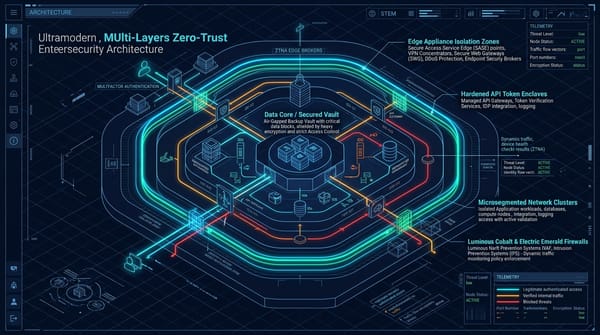
- Peer Network Segmentation: Interconnections between partner state entities (like Adif and Renfe) must operate under strict Zero-Trust inspection rather than implicit inter-agency trust.
- Defending Against AI Reconnaissance: Static rate limits are no longer adequate against AI agents capable of varying source IPs, user agents, and packet timings. Behavioral API anomaly detection is mandatory.
- Air-Gapped Operational Safety: The preservation of train operations proves the immense value of strict physical and cryptographic air-gapping between enterprise IT and OT signaling networks.
Network Hardening Checklist
- Audit Inter-Organization Peering: Enforce mutual TLS (mTLS) with short-lived client certificates on all cross-agency API endpoints.
- Deploy Behavioral API Gateways: Implement API security tooling capable of detecting synthetic payload fuzzing and automated schema manipulation.
- Validate OT Air-Gap Boundaries: Conduct physical port and routing audits to ensure zero routable paths exist between corporate enterprise networks and industrial control networks.