Daiwa Securities Supply Chain Breach: Vendor Server Compromise Exposes 110,000 Client Accounts

On October 4, 2026, Daiwa Securities Group Inc., Japan’s second-largest securities and investment brokerage, announced that a third-party service vendor had been compromised, exposing sensitive account information for approximately 110,000 client accounts. The breach originated at Tokyo-based IT and business communications provider Scala Communications Inc., demonstrating once again that external software vendors remain the most vulnerable flank of enterprise financial perimeters.
Supply Chain Attack Path & Incident Details
Scala Communications provides specialized automated notification and email distribution services for Daiwa Securities' retail investment divisions. Threat actors breached an internet-facing management server within Scala’s network environment. Once inside, the attackers extracted historical communications data and outbound batch dispatch files containing customer financial records:
- Client Full Names and Corporate Entity Designations
- Registered Brokerage Account Numbers
- Primary and Secondary Contact Email Addresses
- Transaction Notification Metadata and Branch Office Identifiers
Daiwa Securities stressed that financial transaction passwords, PINs, and funds withdrawal authentication keys are managed in a separate, isolated mainframe enclave and were not compromised. No unauthorized trades or financial outflows have been detected.
The Fourth-Party Vendor Dilemma
This incident reflects a systemic challenge across global financial institutions: while tier-one banks and brokerages spend tens of millions of dollars hardening their primary data centers, downstream SaaS providers and communication contractors frequently operate with weaker patch cycles, shared administrative credentials, and unsegmented data pipelines.
Enterprise Supply Chain Defense Protocol
- Mandatory Tokenization of Vendor Feeds: Brokerage account numbers and customer identifiers must be cryptographically pseudonymized before transmission to marketing and notification vendors. Vendors should never hold plaintext core account numbers.
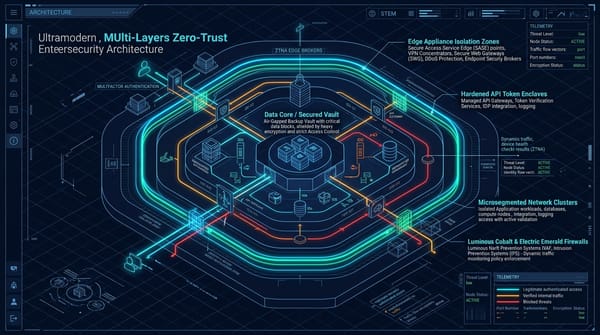
- Zero-Trust Vendor Ingress Auditing: Treat vendor network connections as untrusted. Enforce strict egress data loss prevention (DLP) rules and continuous posture verification on all B2B API endpoints.
- Contractual Breach SLA & Air-Gapping: Mandate continuous vulnerability scanning and sub-24-hour incident notification clauses in all third-party IT vendor contracts.