
CVE-2026-62815: Microsoft QUIC's Critical Unauthenticated Remote Code Execution Flaw
Deep technical analysis of CVE-2026-62815, a CVSS 9.8 Use-After-Free vulnerability in Microsoft QUIC allowing zero-click RCE over UDP.

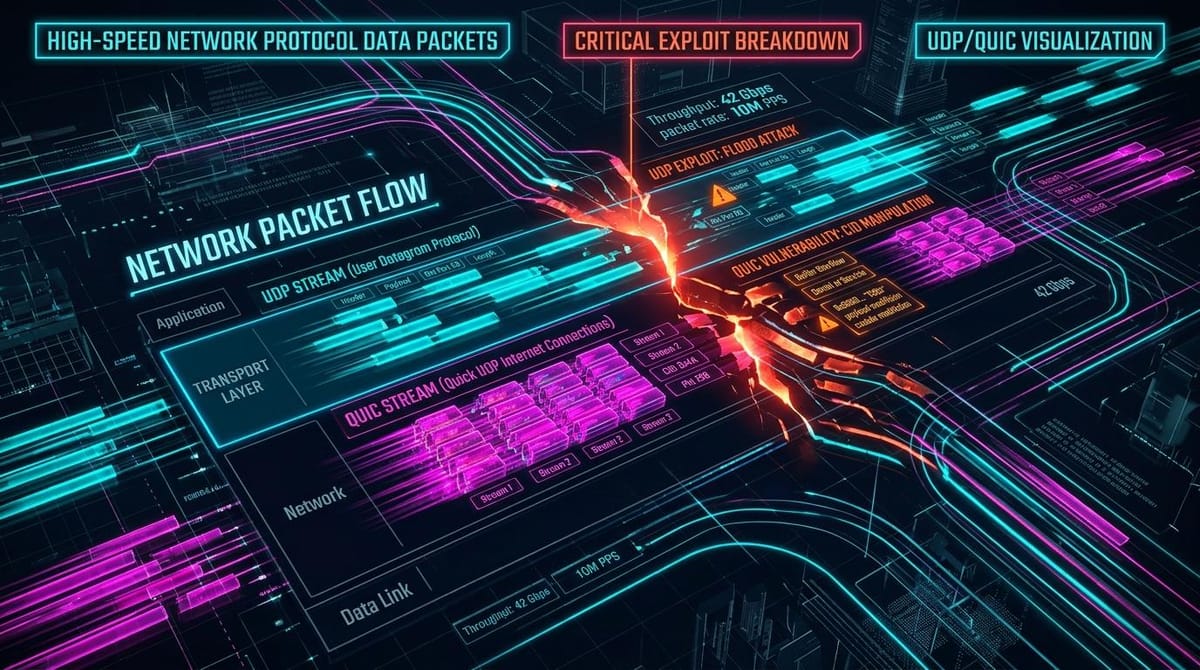
A critical CVSS 9.8 Use-After-Free flaw in Microsoft's MsQuic networking stack exposes Windows endpoints and server clusters to pre-authentication remote code execution over UDP.
CVE-2026-62815 (CWE-416: Use After Free)
Severity: Critical (CVSS 9.8)
Status: ⚠️ Critical Security Patch Issued (High Priority)
Affected Systems: Windows 11 (all editions), Windows Server 2022, Windows Server 2025 with MsQuic / HTTP/3 enabled
Fixed In: August 2026 Cumulative Security Updates
Protocol Mechanics & Vulnerability Vector
The QUIC transport protocol (RFC 9000) operates over UDP to provide multiplexed, encrypted connections for HTTP/3 and SMB over QUIC. Microsoft's native implementation (msquic.sys / msquic.dll) maintains state tables for active connection IDs, stream allocations, and crypto handshakes.
CVE-2026-62815 stems from improper lifecycle management when handling out-of-order NEW_CONNECTION_ID frame retirements during simultaneous connection migration. When an attacker sends specially crafted packet bursts with mismatched retired connection sequence numbers, memory for the connection context is freed while worker threads continue processing packet payloads, creating a exploitable use-after-free condition.
Network Detection & Telemetry
msquic.sys or NETIO.SYS.

