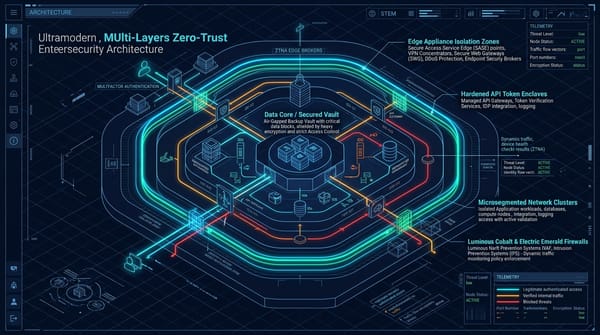
Hardening Enterprise Gateways: AsyncOS, VPN Listeners, and Baseband Stack Defense Playbook

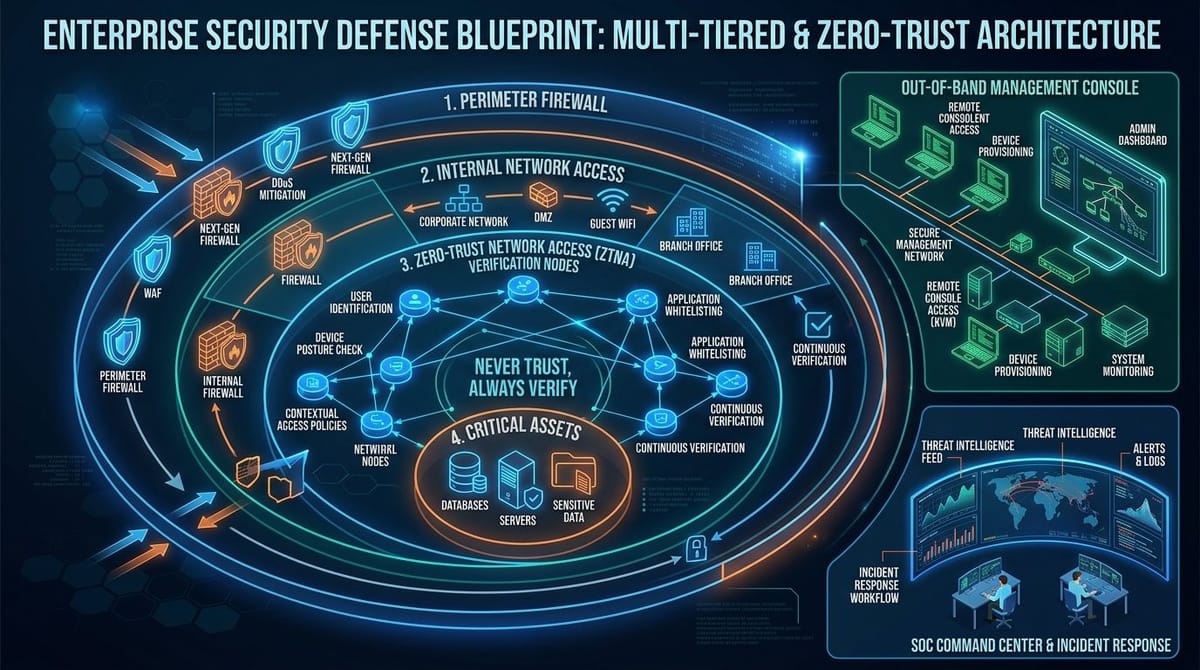
The simultaneous disclosure of zero-day exploits targeting email gateways (Cisco AsyncOS), low-level kernel abstractions (Linux Netfilter), cellular basebands (Google Pixel), and perimeter VPN services (Windows SSTP) underscores a stark reality: perimeter appliances and low-level protocol handlers are high-priority target vectors for advanced adversaries. This guide presents an actionable engineering framework to harden gateway architecture against zero-day exploitation.
Architectural Hardening Pillars
1. Total Network Plane Separation (Out-of-Band Management)
Appliances like Cisco Secure Email Gateway, Cisco ISE, and Windows RRAS servers must never expose administrative control interfaces to the same network segments handling untrusted ingress data.
- Establish dedicated out-of-band (OOB) VLANs accessible strictly through hardware-token-authenticated bastion hosts.
- Apply strict Infrastructure Access Control Lists (iACLs) at the top-of-rack switch to drop non-whitelisted management traffic at wire speed.
2. Memory-Safe Perimeter Isolation & Container Hardening
To defend against kernel-level memory corruption flaws like CVE-2026-53266:
# Disable unprivileged kernel user namespaces
sysctl -w user.max_user_namespaces=0
sysctl -w kernel.unprivileged_userns_clone=0

# Enforce strict seccomp profiles in container runtimes (containerd/CRI-O)
# Block socket(AF_NETLINK) and unshare(CLONE_NEWNET) from untrusted containers
3. Modernizing Enterprise VPN Architectures
Legacy VPN protocols like SSTP and PPTP maintain complex stateful C/C++ daemons in user/kernel space that are notoriously susceptible to memory safety flaws. Modernize enterprise remote access:
- Migrate remote workforce connectivity to WireGuard or IPsec with IKEv2, reducing cryptographic codebase footprints from hundreds of thousands of lines to under 4,000 lines of audited code.
- Transition to Zero-Trust Network Access (ZTNA) brokers where endpoints authenticate before establishing dynamic reverse-proxy application connections, eliminating open listening ports on the public internet.
Continuous Verification Matrix
| Perimeter Layer | Vulnerability Class | Mitigation Control | Verification Command / Check |
|---|---|---|---|
| Email Gateways (AsyncOS) | MIME Parser SQLi / RCE | Patch to 15.5.5-014+ & OOB admin | diagnostic system integrity verify |
| Linux Workloads | Netfilter OOB Write | Kernel 6.10.8+ & disable ebtables | sysctl -a | grep unprivileged_userns |
| Mobile Fleet | Baseband Logic Flaws | Disable 2G & deploy OTA update | Verify Android Build >= 2026-09-05 |
| VPN Infrastructure | SSTP Use-After-Free | Apply MS Sept Update / ZTNA | Inspect TCP 443 RRAS exposure |